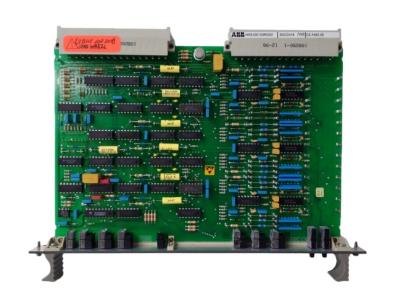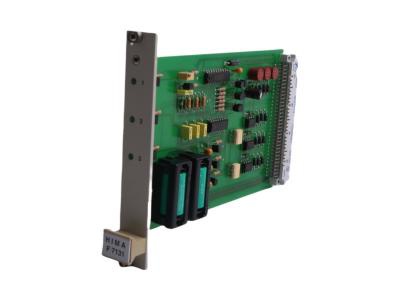
The technical documentation for the Classic 1785 PLC-5 programmable controller is renowned for its excellent task-oriented architecture, designed to help engineers efficiently complete system design. This documentation abandons the traditional, lengthy reading style, dividing the manual according to the specific tasks the user is performing. This allows engineers to quickly locate hardware selection, system layout, and functional planning information directly relevant to the current design phase, without wasting time on irrelevant content. The core objective of this meticulously organized documentation system is to assist designers in building a stable and reliable control system. The manual clearly guides users on how to select appropriate hardware components based on actual process flows, environmental safety factors, and system functional flows, and deeply explains the key features of the PLC-5 processor and its application methods. Whether it's a centralized or distributed control architecture, a clear design framework can be found here.
The Classic 1785 PLC-5 processor family offers diverse options to meet the needs of different application scenarios. All members adhere to a set of common core features, laying the foundation for high system compatibility. These processors use the same physical size, are installed in the leftmost slot of the 1771 I/O rack, and can work collaboratively with up to 32 1771 I/O modules in the same rack. More importantly, the entire family shares unified programming software, terminals, and a basic instruction set, ensuring seamless portability and reuse of ladder diagram programs and Sequential Function Chart (SFC) across any PLC-5 processor. For example, users can utilize subroutine call instructions to optimize program structure, encapsulating repetitive logic to effectively save memory space. Meanwhile, SFC, as a powerful sequential control language, allows engineers to break down complex processes into intuitive steps and transition conditions, greatly improving program readability and status monitoring capabilities.
The Classic 1785 PLC-5 controller is designed with powerful operating modes to adapt to complex system integration needs, especially in applications requiring distributed control or high availability. When the processor is set to scanner mode, it can scan and control remote I/O links, while simultaneously acting as a supervisory processor to manage other processors in adapter mode. This mode supports synchronous scanning of local I/O as well as asynchronous scanning and synchronous data updates of remote I/O, and can handle modules with various point counts and complementary I/O configurations. On the other hand, processors other than PLC-5/10 can be configured in adapter mode, exchanging data with the supervisory processor in real-time and predictably via remote I/O links, and independently monitoring their local I/O. Furthermore, the system supports building a PLC-5 backup system configuration, where the master system actively controls remote I/O and DH+ communication, while the backup system is on standby, seamlessly taking over in the event of a master system failure. This significantly improves the continuous operation capability of critical processes.
Building a complete Classic 1785 PLC-5 programmable controller system goes far beyond the processor itself. Its strength lies in its ability to integrate with a wide range of I/O modules, adapters, and peripherals. When selecting I/O modules, engineers must comprehensively consider factors such as point requirements, physical distribution, signal type, voltage range, backplane current consumption, and isolation requirements. The system can connect to dozens of devices via remote I/O links, including other PLC processors in adapter mode, interface modules for various drives, industrial HMIs such as PanelView and RediPANEL, and even CNC systems and robot interfaces. When selecting a power supply for a rack containing processors or remote adapter modules, the total backplane current consumption of all modules must be accurately calculated, with margins for future expansion, to select a model from the standard power supply list that meets the input voltage and power requirements. This high degree of modularity and scalability allows the PLC-5 system to flexibly adapt to industrial applications of various scales, from simple machine control to complex plant-wide automation.
Recommended model
| 1747-L553 | 1785-ENET/C | 1785-L30B |
| 1771-NIS | 80190-100-01-R | 1785-L40E |
| 1785-L40B/E | 80190-320-03-R | 1785-LT/B |
| 1771-OA | 80190-380-02-R | 1785-LT3 |
| 1771-ASB/E | 80190-378-52 | 1785-ME16 |
| 1771-OB | 80190-380-01-R | 1785-ME32 |
| 1771-OZL | 80190-378-51 | 1785-PFB |
| 1771-IB | 1756-SYNCH | 1785-V40L |
| 1771-OW | 1756-TBCH | 1785-V40V |
| 1771-P6S/B | 1785-L20E | 1785-L80B |
If you want to know details, please contact me without hesitate.