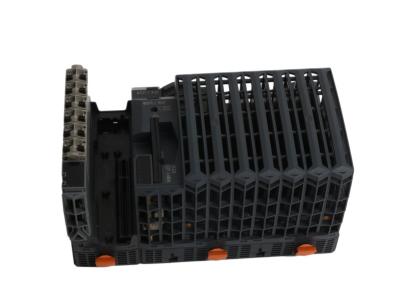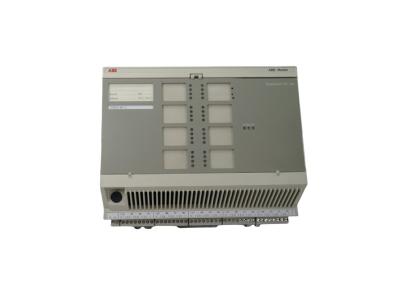
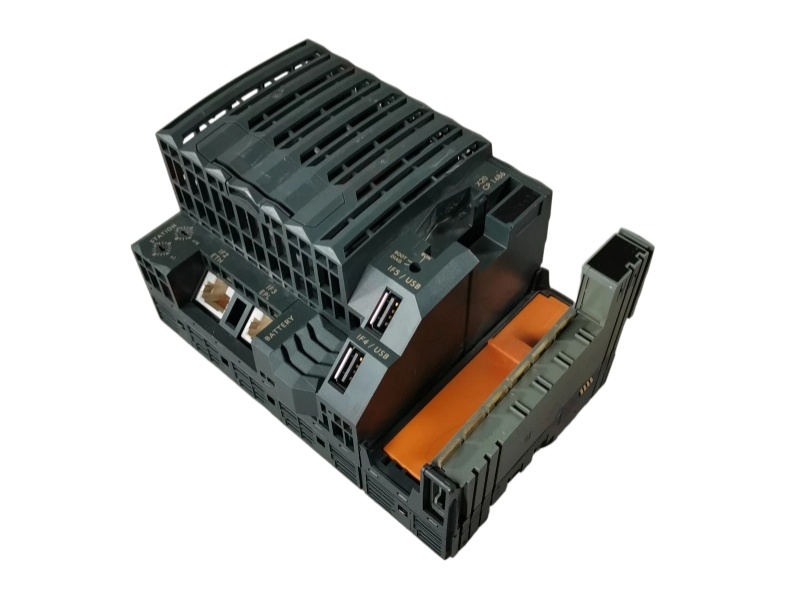
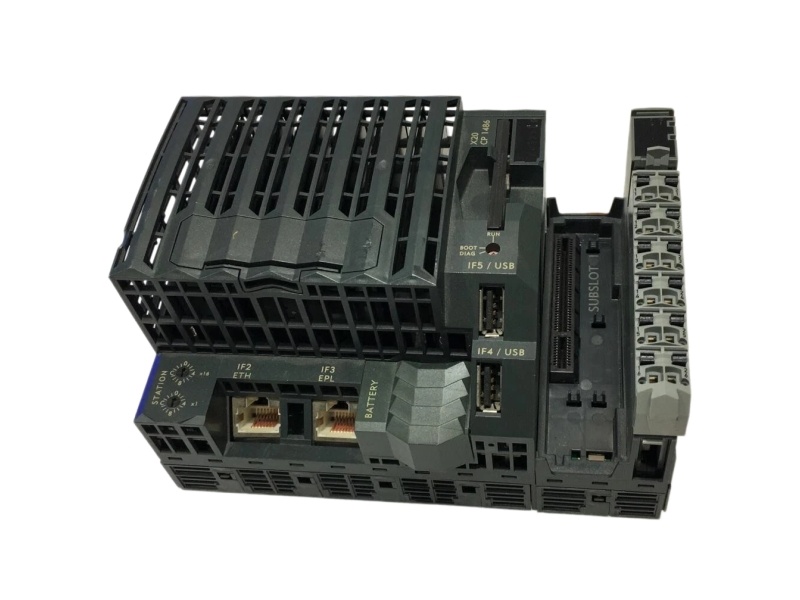
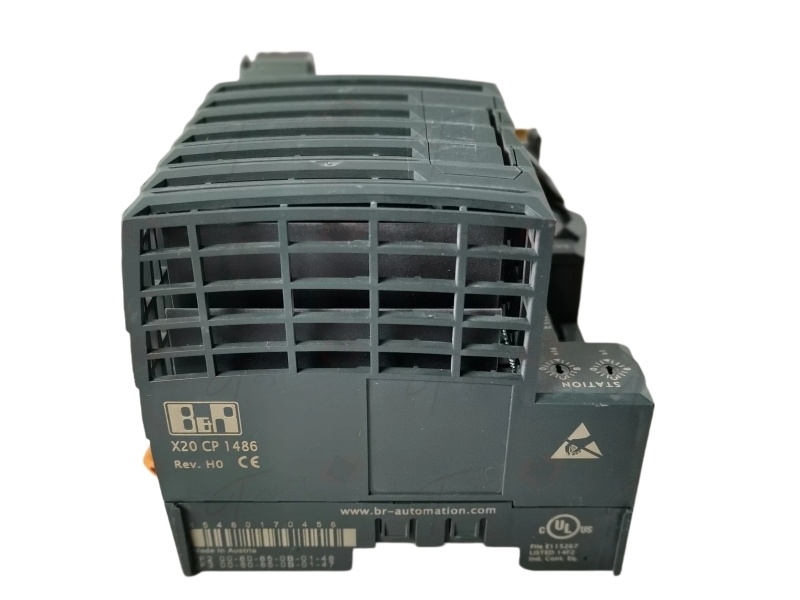
X20CP1486 is a B&R high-performance programmable controller module featuring an integrated background I/O processor core. Fully compatible with X20 slice systems, this unit works seamlessly with automated industrial lines to deliver rapid task processing, flexible hardware expansions, and stable industrial network communication.
Features
High-Tier Processing Power: Equipped with an Intel Celeron 650 MHz main processor core matched with a background I/O co-processor for maximum loop throughput.
Active Thermal Guard: Features a factory-delivered, software-monitored, exchangeable fan assembly to ensure unrestricted operation across the entire temperature range.
Real-Time Bus Master: Built-in ETHERNET Powerlink V1/V2 interface providing high-speed synchronous communication down to 200 µs cycle times.
Expanded Volatile Memory: Integrated with 64 MB of high-speed SDRAM and a dedicated 1 MB battery-backed SRAM partition for user data structures.
Flexible Interface Scaling: Configured with one multi-purpose slot accommodating specialized modular X20 interface cards for flexible field networking.
System Compatibility & Alternatives
System Compatibility:
Fully compatible with the B&R Automation Studio programming environment (v2.5.2.7 or later), Automation Runtime operating systems, standard X20 interface cards, exchangeable TrueIDE SSI CompactFlash cards, 4A0006.00-000 lithium backup batteries, and standard 12-pin X20 terminal block connections.
Alternative Model & Differences:
The immediate alternative performance variant within the same unthreaded single-slot physical envelope is catalog number X20CP1485.
The Difference: The X20CP1486 incorporates the highest-spec Intel Celeron 650 MHz processor core paired with a doubled memory base of 64 MB DRAM and a built-in monitored, exchangeable fan assembly. The lower-tier X20CP1485 module utilizes a Celeron 400 MHz processor core, provides only 32 MB DRAM, lacks a hardware fan assembly, and operates strictly under fanless rules which require thermal derating limits at higher ambient temperatures.
Ordering Information
|
Model Option Parameter |
Hardware Specification Details |
|
Model Number |
X20CP1486 |
|
Processor Technology |
Intel Celeron 650 MHz with Integrated Background I/O Processor |
|
Onboard DRAM Memory |
64 MB SDRAM |
|
Onboard SRAM Memory |
1 MB User RAM |
|
Integrated Communication Interfaces |
1x RS232 (IF1), 1x Ethernet 10/100 Base-T (IF2), 1x ETHERNET Powerlink (IF3), 2x USB 1.1 (IF4/IF5) |
|
Modular Slot Capacity |
1 Insert slot for X20IF modular interface cards |
|
Cooling Architecture |
Software-monitored, exchangeable hardware fan module |
|
Typical Power Consumption |
13.5 W (Measured without optional memory card, USB loads, or interface module) |
|
Standard Delivery Package Items |
X20CP1486 CPU, 4A0006.00-000 battery, terminal block X20TB12, locking plate X20AC0SR1, slot covers |
|
Physical Outer Dimensions |
150 mm Width x 99 mm Height x 85 mm Depth |
Installation & Troubleshooting FAQ
Q1: At what thermal thresholds does the exchangeable fan activate, and can the CPU run without it?
A: The X20CP1486 is specifically equipped for unrestricted performance over its full 0°C to 55°C operating range when the fan is installed. Up to an ambient temperature of 45°C, fanless operation is physically permitted, but exceeding this target without an active, spinning fan assembly will trigger an automated over-temperature system shutdown when the core internal die reaches 100°C.
Q2: How do I physically replace a worn-out fan module without damaging the casing?
A: The controller utilizes a patented tool-free fan replacement mechanism. Use your thumb to press inward on the small integrated plastic fan lock latch located at the top edge of the module casing, then slide the fan housing straight out. Insert the new replacement module (Part Number: X20AC0EF1) into the open slot guide rails, pressing down firmly until you perceive a distinct mechanical "click".
Q3: What diagnostic problem is indicated by a cyclical red blinking pattern on the status error LED?
A: A red blinking error indicator on the S/E dual-LED indicates a definitive, non-recoverable system halt condition. Count the switch-on phases within the repeated 2-second cycle; for instance, a sequence of three short flashes followed by one long flash (•••−) indicates a fatal RAM verification error, meaning the hardware module is structurally defective and must be completely replaced.
Q4: Can an online operating system runtime update be carried out over the Ethernet port?
A: An online runtime system update can be carried out via an active Ethernet network or CAN network, but only if a valid, uncorrupted operating system file structure already exists on the inserted CompactFlash card. If you are commissioning a completely new or blank CompactFlash memory module, the initial download must be performed exclusively over the onboard non-isolated serial RS232 interface port while the hardware switch is in the BOOT position.





 For the quick assistance message us on WhatsApp at