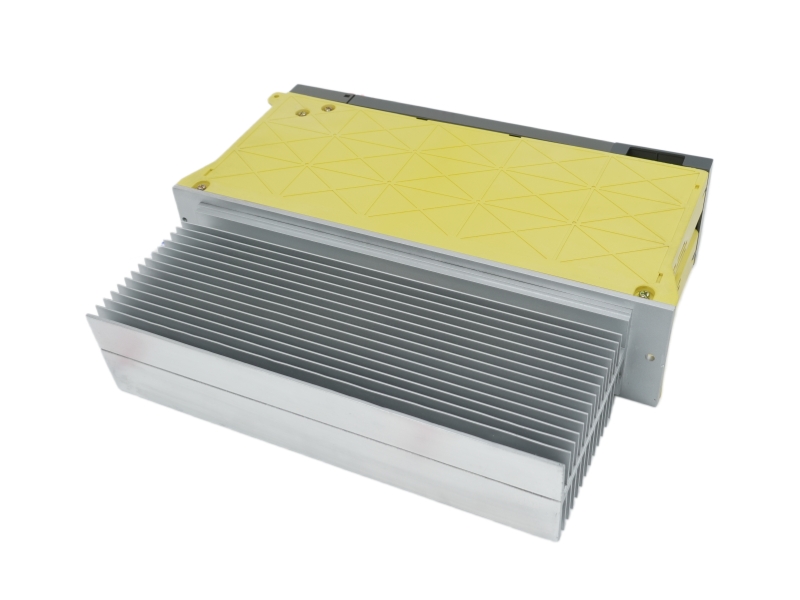
Product reference: A06B-6096-H106
A06B-6096-H106 is an industrial control-system component identified by its complete manufacturer part number. Revision, interface and installed-system compatibility should be checked before replacing an existing unit.
Stockoems is an independent reseller of industrial automation products. Manufacturer names and part numbers are used for identification only; the written quotation and confirmed order requirements define the product supplied.
Confirm the complete part number, hardware revision, firmware when applicable, rack or backplane compatibility, connector type, supply voltage and system configuration.
Please provide the complete part number, quantity, destination, required condition and clear label photos. Include the installed system or mating component when compatibility matters.
Not necessarily. Matching appearance or a partial model number does not confirm electrical, mechanical, firmware or system compatibility. Verify the complete ordering code and application.
Where available, product and label photos can be confirmed before shipment. Shipping method, cost and estimated dispatch information are stated in the quotation or order confirmation.
Exact-model information for maintenance, verification and industrial spare-part procurement.
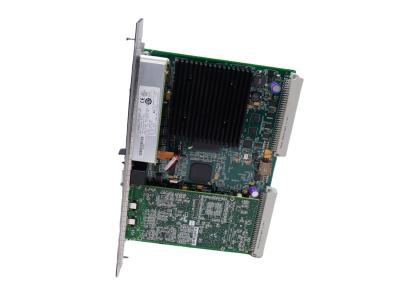
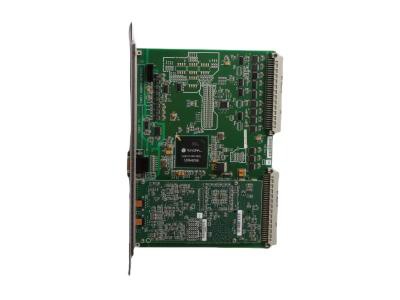
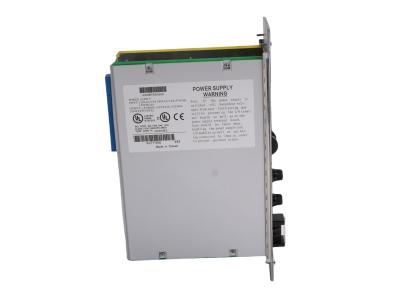
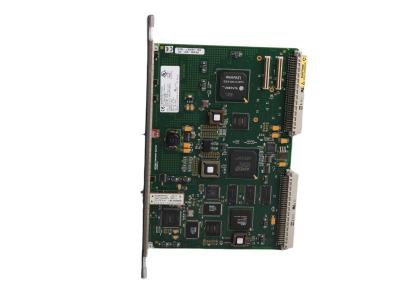
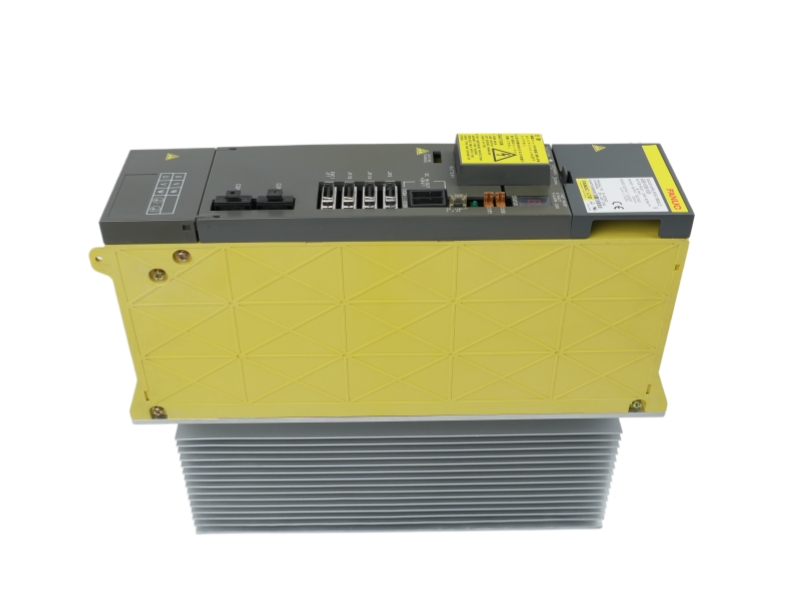
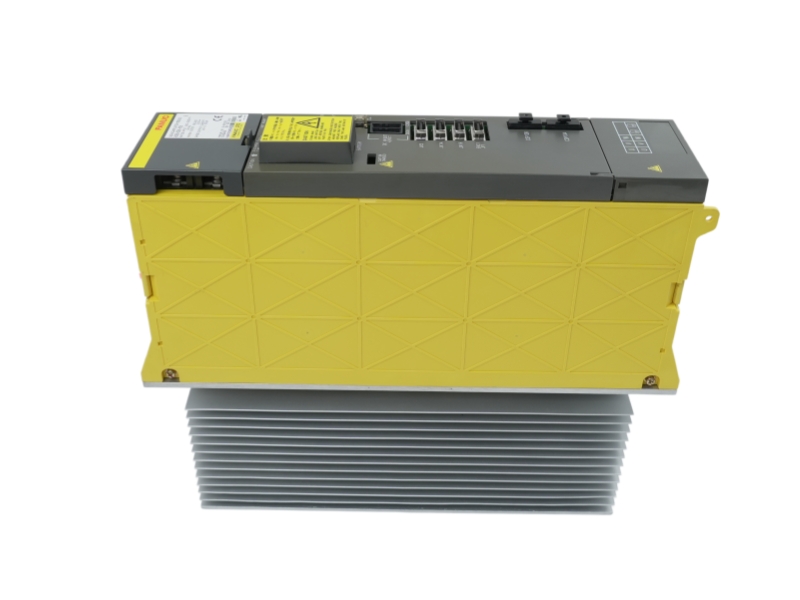
FANUC A06B-6096-H106 is an ALPHA-series single-axis servo amplifier module identified as SVM1-130. It is intended for servo-axis control within a correctly matched FANUC CNC drive arrangement. The module is relevant to maintenance teams replacing a failed amplifier, machine rebuilders preserving an established control platform, and procurement teams sourcing an exact spare. Before ordering, compare the complete part number, amplifier label, connected motor, power-supply arrangement, connector layout and machine documentation. Hardware revision, condition and availability can vary by offered unit and must be confirmed in writing.
| Manufacturer | FANUC |
| Complete Part Number | A06B-6096-H106 |
| Product Type | ALPHA Single-Axis Servo Amplifier Module SVM1-130 |
| Series / System | FANUC ALPHA Servo Amplifier |
| Model Configuration | SVM1-130 single-axis configuration |
| Product Condition | Contact us to confirm. |
| Hardware Revision | Contact us to confirm. |
| Firmware / Software Version | Contact us to confirm. |
| Country of Origin | Contact us to confirm. |
| Compatibility | Confirm against the original module, connected equipment and system documentation. |
| Warranty | Contact us to confirm written quotation terms. |
| Availability | Contact us to confirm. |
| Shipping | Worldwide options quoted after destination and order review. |
| Function | Servo-axis amplifier for a matched FANUC drive system |
| Axis configuration | Single axis |
| Configuration identifier | SVM1-130 |
This exact part should be evaluated as one component of its installed control or drive architecture. A matching enclosure or family name does not establish interchangeability. Record the complete label, connected equipment, wiring and revision details before removing the original unit. Preserve application programs, parameters and machine documentation where applicable, and use qualified personnel for isolation, installation and commissioning.
Please contact us to confirm the exact revision, firmware version, condition and availability before ordering.
Availability depends on the unit and quotation date. Send the required quantity and destination for a current supply check.
Condition must be confirmed for the specific offered unit. Written quotation details and product photographs can be requested before ordering.
Compare the complete part number, suffix or configuration, hardware labels, connected equipment, interfaces and original system documentation.
Yes. Provide clear photographs of the original unit, connectors and nameplate so the sales team can review the requested identity.
Worldwide shipping options can be quoted after the destination, quantity, condition and order requirements are confirmed.
Send us the complete part number, required quantity, destination country and product label photos. Our team will check availability, condition, compatibility requirements and shipping options.
Stockoems is operated by Apter Power Limited and is an independent reseller of industrial automation products. Manufacturer names and trademarks are used for identification purposes only.
Verification-led support from quotation through after-sales follow-up.
Each entry is an independent product reference and is not presented as a direct replacement. Confirm the manufacturer, complete part number, revision and compatibility before ordering.
| 21501-00-16-05-02 | 330180-X1-05 MOD 143416-02 | 330901-05-55-05-11-05 | 74712-01-10-02-00 | 330105-10-02-05 MOD 157310-11 |
| BC810K02 3BSE031155R1 | 10014/I/F | 330105-10-02-05 MOD 157310-09 | 330171-00-14-10-02-05 | 146054-14-10-02-00 |
| 6SL3224-0BE31-1UA0 | HE693ADC415 | 6GK1143-0TB01 | TPC1061TI | 8200-203 |
| C98043-A7105-L4-9 | X20CP1486 | X20CP1484-1 | 3BHB002953R0108 | 3HNA006565-001 |
| KJ2005X1-SQ1 12P6383X022 | A06B-6096-H106 | A06B-6096-H104 | A06B-6087-H155 | 6ES5948-3UR23 |
| 6ES7416-3ES06-0AB0 | 6ES7315-2AG10-0AB0 | 6ES7134-4GB11-0AB0 | 6ES7153-2BA10-0XB0 | 6ES7321-1BL00-0AA0 |
| 6ES7332-5HD01-0AB0 | 6ES7414-2XG04-0AB0 | 6ES7952-1AK00-0AA0 | A06B-6114-H105 | A06B-6117-H106 |
| A06B-6079-H106 | A06B-6089-H106 | A06B-6090-H006 | A06B-6077-H106 | A06B-6070-S006 |
| 1756-L71 | 1756-EN2T | 1756-IB16 | 1756-OB16E | 1756-PA75 |
| PM866K01 3BSE050198R1 | CI854AK01 3BSE030220R1 | AI810 3BSE008516R1 | DO810 3BSE008510R1 | AAI141-S00 |
| ADV151-P00 | CP451-10 | ANB10D-420/CU2N | F8650X | F7126 |
| F7131 | F6217 | FBM201 | FBM204 | FBM217 |
| P0916AG | IC693CPU364 | IC695CPU310 | IC695ETM001 | IS200UCSAH1A |
| KJ3002X1-BG2 12P1731X082 | KJ4001X1-BA2 12P3373X012 | TC-CCR014 | CC-PAIX02 | 3500/42M 176449-02 |
Send the required model, quantity, destination country and label photos for availability and compatibility review.