
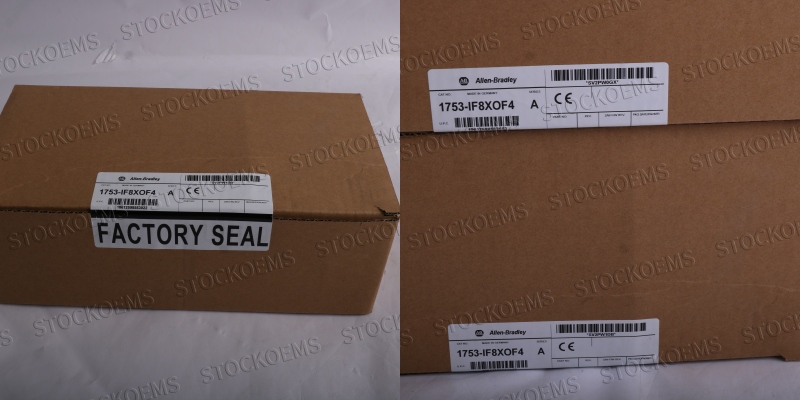
The Allen-Bradley GuardPLC 1753-IF8XOF4 is a module that fits into real working environments without much trouble. It does not rely on complex features but instead offers steady performance and predictable behavior. For many engineers, this kind of consistency is exactly what they are looking for, especially in safety-related systems where reliability matters more than anything else.
On many project sites, engineers care less about specifications on paper and more about whether a module can run steadily over time. The 1753-IF8XOF4 is usually chosen for systems where safety signals and process signals need to be handled together. It provides eight safety analog inputs, which are often used to read key values like temperature or pressure, while the four analog outputs are used for simple control tasks. In real use, it is connected to a GuardPLC controller through Ethernet, forming part of a distributed setup. This kind of arrangement is common in industries such as energy or chemical plants, where equipment is spread out and signals need to be collected from different areas. The module does not try to do too much; it focuses on stable signal handling, which is what many engineers actually need.
In practice, installation is not just a one-time task. It has a direct impact on how the module behaves months or even years later. The 1753-IF8XOF4 is mounted on a DIN rail, and it is usually installed horizontally. This helps heat move away from the unit more easily. If the cabinet is crowded and there is no space left around the module, heat can build up, and that may lead to unexpected issues. Grounding is another detail that is easy to overlook but important in real environments. Even though the module is connected through the rail, a proper grounding point is still required. Power supply also matters. A stable 24V DC source with isolation is normally used, not just for meeting standards but for avoiding noise and interference. These are the kinds of details that do not look critical at first, but they often explain why some systems run smoothly while others do not.
When the system is running, most attention goes to communication and signal quality. The module has two Ethernet ports, which makes wiring more flexible. In some cabinets, devices are connected one after another, which helps reduce cable complexity. However, if the network is not planned well and a loop is created, communication problems can appear. That is something engineers usually try to avoid during setup. On the signal side, measurement depends a lot on how inputs are handled. For voltage signals, leaving the input open can cause unstable readings, so adding a resistor is a common practice. For current signals, an external shunt is needed, and its accuracy will directly affect the final value. These are small details, but in daily operation, they make the difference between clean data and confusing results.
Recommended Model
| 1756-BA1 | 1756-DMD30 | 1756-IA16 |
| 1756-BA2 | 1756-EN2F | 1756-IA16I |
| 1756-CMS1B1 | 1756-EN2TSC | 1756-IB16ISOE |
| 1756-CN2R | 1756-EN3TR | 1756-IF16H |
| 1756-CN2RXT | 1756-ENET | 1756-IC16 |
| 1756-CNB | 1756-EWEB | 1756-IF8I |
| 1756-DMA31 | 1756‐HSC | 1756-IH16I |
If you want to know details,please contact me without hesitate.